

Planning a home addition in Fairfax County isn’t just about adding square footage; it’s about creating a space that suits your needs. It’s about creating space that works for your family while blending seamlessly with your existing home. At WellCraft Kitchens, we’ve been planning and building home additions across Fairfax County since 1998. Our planning process ensures you get exactly what you need, on budget and on schedule, with no surprises along the way.
WellCraft Kitchens plans home additions in Fairfax County through a step by step process that begins with an in home consultation to understand goals, followed by custom designs with 3D renderings. Homeowners then select materials, review clear budgets and timelines, and receive ongoing project management through construction and final walkthrough.
Our Home Addition Planning Process Puts You in Control at Every Step
We follow a clear, structured planning process that keeps you informed and involved from the first consultation to the final walkthrough. You approve each decision before we move forward. This collaborative approach means your Fairfax County home addition reflects your vision, fits your budget, and meets your family’s needs. Here’s exactly how we plan your home addition.
Step One: Free In Home Consultation to Understand Your Goals
Every home addition plan starts at your kitchen table. We come to your Fairfax County home for a free consultation. You tell us what you’re hoping to accomplish. Maybe you need a home office, another bedroom, an expanded kitchen, or space for aging parents. We listen carefully, ask questions, and assess your property.
We measure your existing space, examine your home’s structure and style, and discuss what’s realistic for your lot and budget. This consultation typically lasts 15 to 60 minutes.
Step Two: Custom Design Development With 3D Renderings
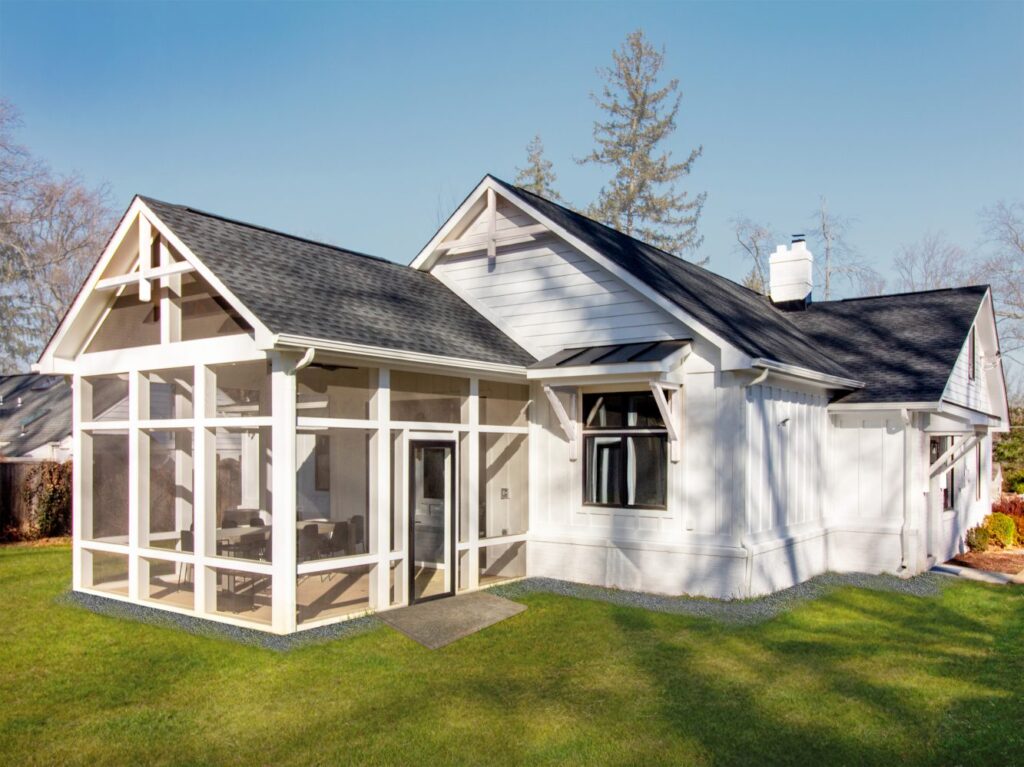
After your consultation, we develop a customized addition plan tailored to your goals and budget. We design your addition to blend smoothly with your existing home, matching your architectural style, roofline, siding, and trim work. This isn’t a template we pull off the shelf.
We create 3D renderings of your proposed addition. These detailed visualizations show you exactly what the finished space will look like before any construction begins. You’ll see how the addition connects to your existing home, where windows and doors will be placed, and how the roofline flows. This eliminates guesswork and gives you confidence in your decisions.
Step Three: Material Selection at Our Chantilly Design Studio
Once you approve the design concept, you’ll visit our design studio in Chantilly to select materials. We walk you through options for flooring, windows, doors, lighting fixtures, trim work, and paint colors. You’ll see and touch everything before it goes into your home.
We help you navigate choices without overwhelming you. We explain the pros and cons of different materials, discussing durability, maintenance, and cost.
Step Four: Transparent Budget and Clear Project Scheduling
We provide clear, uncomplicated pricing. Before any work begins, you receive a detailed estimate that breaks down costs. You’ll know what you’re paying for and why. Our transparent approach means no hidden fees and no surprise charges. Once we finalize your design, materials, and budget, we establish a clear project schedule with specific start and finish dates.
Step Five: Project Management and Construction Oversight
Our project manager maintains close communication with you throughout the build. You stay updated as work progresses, from foundation and framing to plumbing, electrical, and finishing work.
Our licensed and insured team handles every aspect of construction with care and precision. We coordinate all trades, manage inspections, and ensure quality at every stage. If questions or concerns arise, you have direct access to your project manager.
Step Six: Final Walkthrough and Project Completion
When construction is complete, we schedule a final walkthrough with you. We go through your new addition room by room, making sure everything meets your expectations. We welcome your input and address any final details. We explain how to maintain your new space and answer any remaining questions.
Conclusion
Planning a home addition in Fairfax County requires experience, attention to detail, and a process that keeps you informed at every step. At WellCraft Kitchens, we’ve refined our planning process over more than two decades and 1,000 completed projects. We take the time to understand your goals, create custom designs with 3D renderings, help you select materials, provide transparent pricing, and keep you updated throughout construction.
Contact us to schedule your free consultation. We’ll visit your Fairfax County home, discuss your addition goals, and show you exactly how we’ll plan and build the extra space your family needs.
FAQs
What happens during the planning phase of a home addition?
Planning includes a free in home consultation, custom design with 3D renderings, material selection at our Chantilly showroom, detailed budgeting, and project scheduling. You approve each step before construction begins.
How long does planning take?
Planning timeline depends on your addition’s complexity and decision making pace. We typically develop designs and renderings within a few weeks after your initial consultation.
Will the addition match my existing home?
Yes. We study your home’s architectural style, materials, and proportions during planning. We match siding, rooflines, windows, and trim details. Our 3D renderings show how the addition will blend before construction starts.
How do you keep me informed during construction?
Our project manager maintains close communication throughout, updating you as work progresses. You have direct access to address questions or concerns at any time.